Math Your Mind: Helping Students Think Like Mathematicians
Apple Pi Education, a math education company, created Math Your Mind to shift student identity, not just student performance.
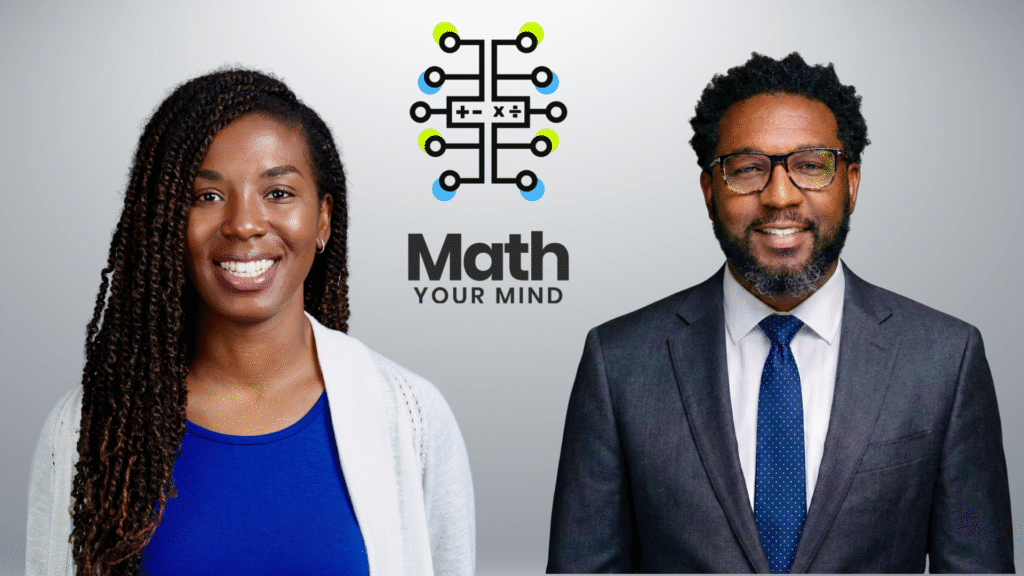
Years of declining math performance, widened by pandemic learning loss, have left students underprepared. Now, AI is forcing a reckoning of how deeply students actually understand the subject. Dr. Christina Eubanks-Turner (C.T.), a math professor at Loyola Marymount University, and Dr. Earl Turner III (E.T.), a behavioral scientist and former Teach for America educator, founded Math Your Mind to address the root cause: students who never learn to see themselves as math people.
How did you both found the company?
C.T.: My full-time role is as a math professor at Loyola Marymount University. Throughout my career, I’ve been interested in mathematics education, working with math teachers and helping them understand the whys behind the math they teach. I started Apple Pi as a one-woman operation, creating my own professional development workshops for teachers. Earl is my husband; he’s a behavioral scientist. He understands the educational psychology behind a lot of this, and since he’s partnered with me, we’re taking this company to the next level.

What does it look like when a student’s mind is “mathed”?
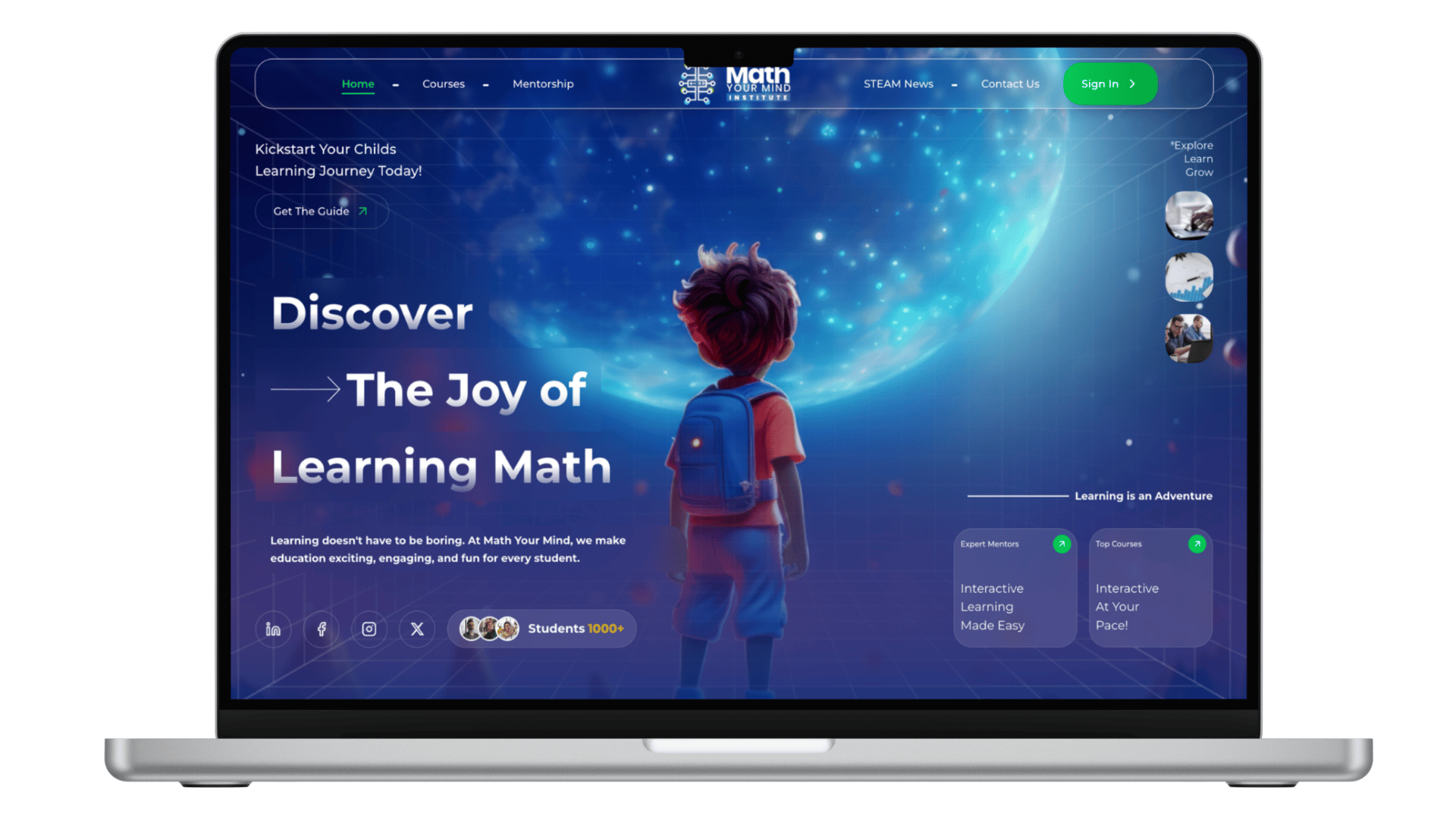
E.T.: I started doing Teach for America and stayed in the classroom for 5 years, teaching middle and high school math. Students could not see where math concepts existed in the real world. We realized that to math your mind, you no longer see math as a problem to be solved but as a tool for solving problems.
C.T.: It’s also about understanding and valuing math in everyday life. You value mathematical, quantitative thinking. We want a student to see themselves as a person who is math-capable. Their mind naturally goes to use math to solve real-world problems, and value using that math in everyday life.
What makes this the right time for this company to exist?
E.T.: There’s still a lot of conversation around recovering from COVID and the learning losses that happened. Math has just been a difficult subject for students. But we found that while performance was even lower after COVID, students’ attention and the way they care about their education are now actually different. When I started going into schools in 2024, I was blown away by how many students were in their seats, eager and excited to learn anything.
C.T.: We have to deal with AI in education. This company is thinking about how to position student learning in the age of AI. AI is really challenging us to think about how we use AI as a tool to advance human thinking. How do we push human intelligence forward? We’re thinking about that in terms of mathematical teaching and learning, and how we position our products around the critical-thinking skills that will help continue to advance human thinking.
What has it been like to come full circle, back to Johns Hopkins University for this accelerator?
E.T.: It is a dream come true, not in the cliche way, in every sense of the phrase. I had no idea that this program was coming. My learning experience at Hopkins was so significant and so great; it transformed my way of thinking, who I am as a person, and what I’m now capable of. I thought the best place for me to continue learning would be the Hopkins Business School. I never thought I would ever get this type of support.
What is your 5-year vision for Math Your Mind?
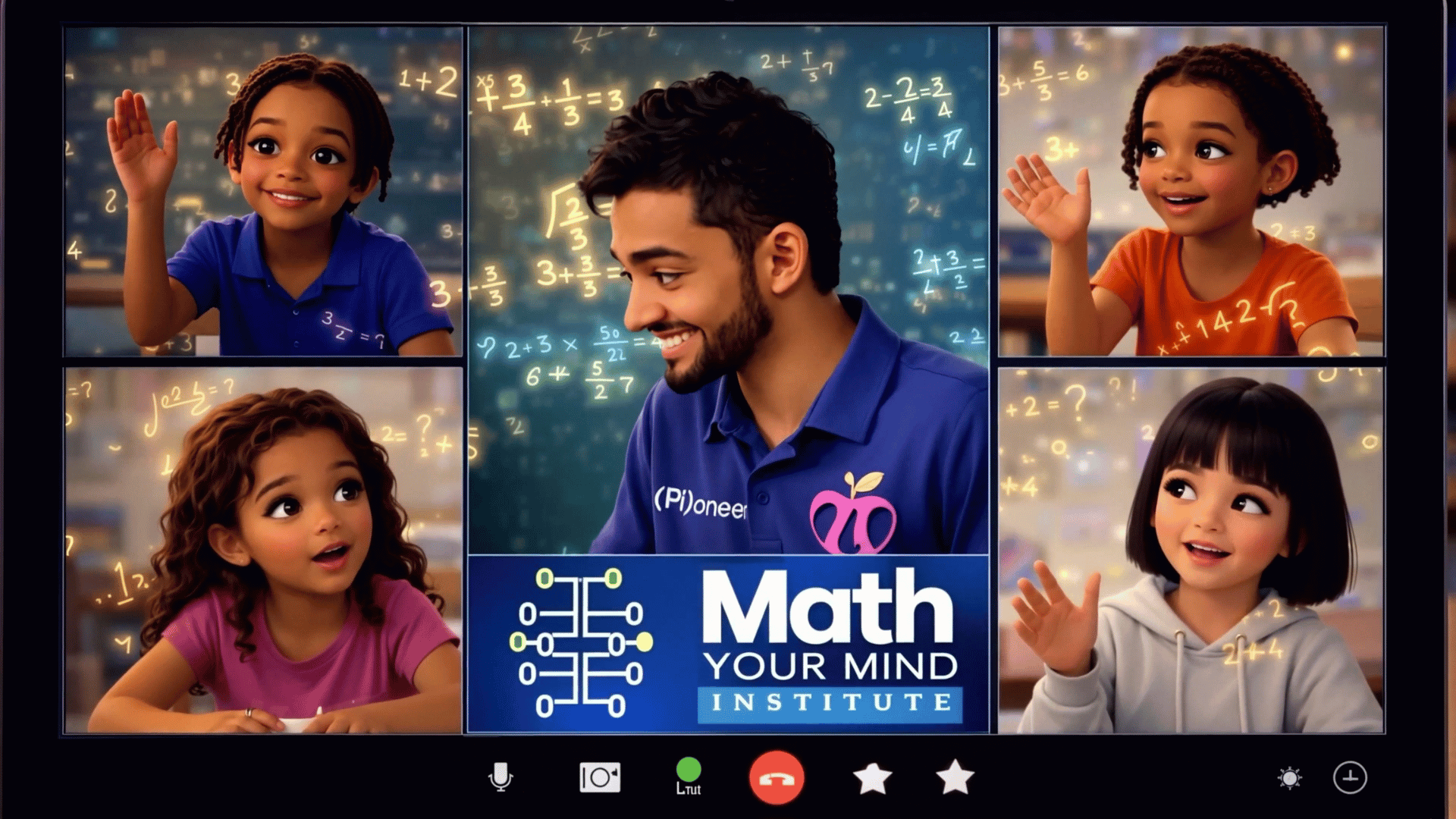
E.T.: In five years, Math Your Mind will serve hundreds of schools and tens of thousands of K–12 students across the country, moving math proficiency measurably toward closing the gap between local performance (27% NAEP) and the national benchmark (39%). We will get there not by skilling and drilling content, but by shifting the upstream variable everyone ignores—students’ relationship with math—using our six attitude attributes to convert disengagement into identity, interest, and ultimately achievement. Math Your Mind changes the field by proving that how students feel about math is a teachable, measurable lever, not a soft afterthought, and by using our tools, instructional methods, and curriculum, we can act on improving students’ math attitudes at scale.
C.T.: A lot of the partners want us to work with students who are right on the edge of being high achievers. If we could get a community of those students in a supportive environment who are right on the cusp, and who are developing a real interest in math, we could see lifelong mathematical learners who successfully matriculate through school and expand their thinking.