smartSTAT: Bringing the Code Cart Into the 21st Century
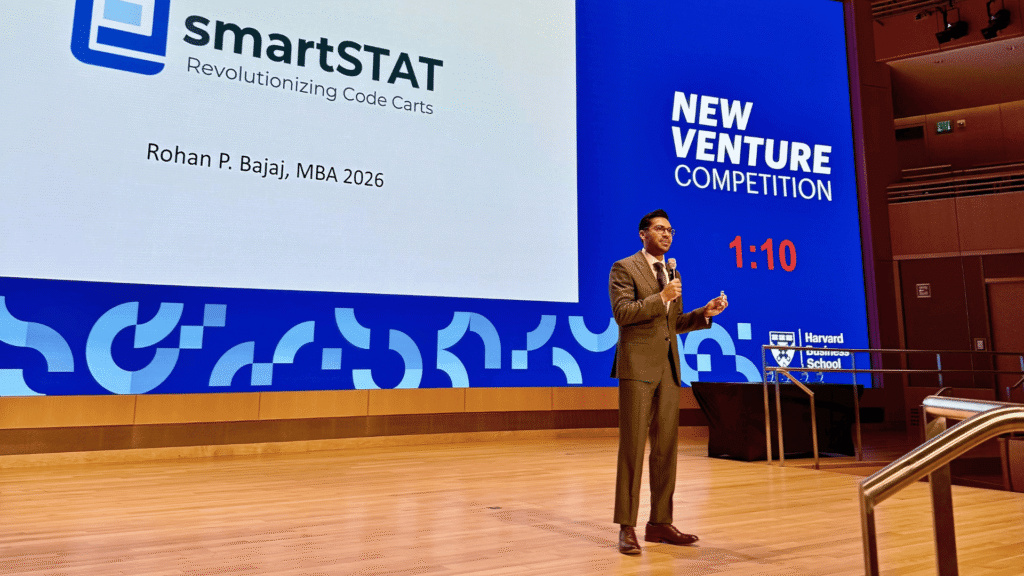
For over 100 years, hospitals have relied on manual checks for their emergency supply carts. Physician-entrepreneur Rohan Bajaj is building the technology to change that.
In a hospital emergency, every second counts. Yet the code carts that store life-saving medications and supplies for cardiac arrests and other crises have relied on the same manual inventory systems for over a century. smartSTAT has built the world’s first tech-enabled code cart, automating inventory management to reduce frontline worker time, improve patient safety, and increase compliance. The smartSTAT team, consisting of engineers with experience at Moderna and Apple, is led by Rohan Bajaj (R.B.), a practicing physician and Harvard Business School MBA candidate.
How did you come up with the idea behind smartSTAT?
R.B.: One night in the ICU, I had a young patient whose heart stopped, and while fighting to save his life, I realized there’s a second battle: finding medications from the code carts. These are cabinets that contain life-saving medications and emergency supplies. What really blew me away is how much of a time sink it was. If we can do it for fast fashion, why can’t we have this high reliability, high-efficacy tracking for life-saving medications and supplies?
How does smartSTAT work?
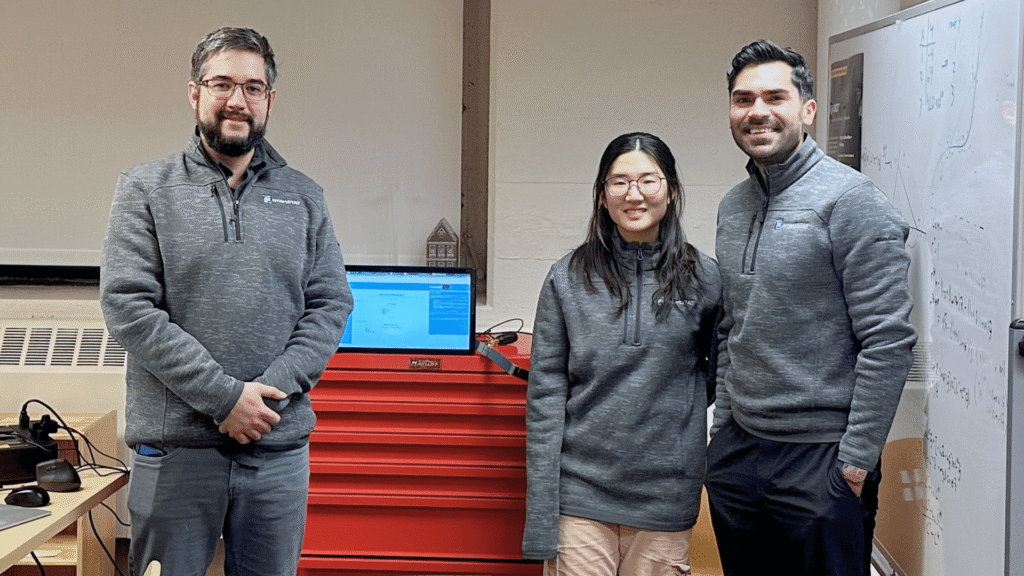
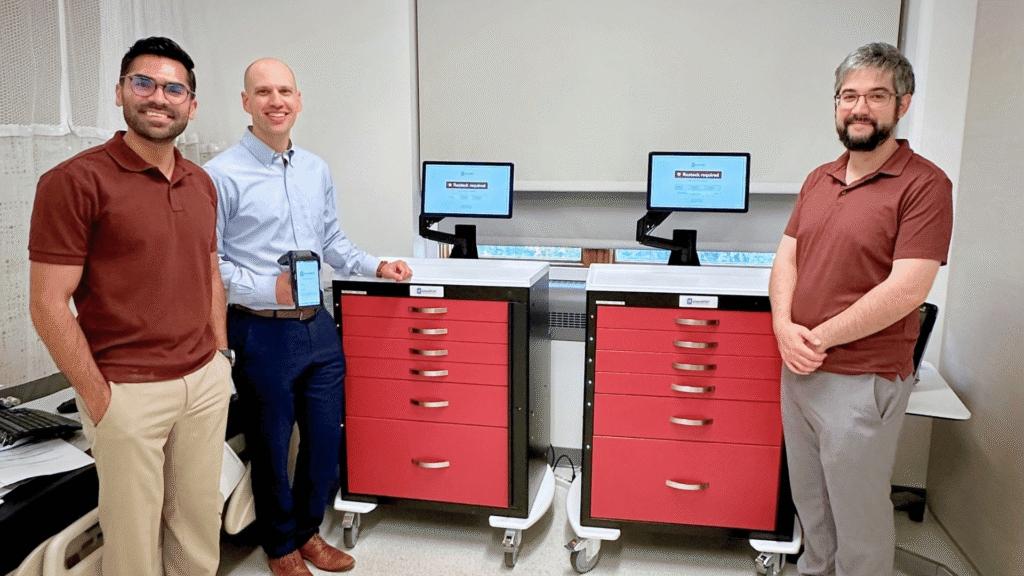
R.B.: smartSTAT is a hardware-software platform. We’re selling a code cart with RFID technology, using the highest-grade components that can read thousands of times per second and cycle through the 250-plus items in inventory. We have a software component: a central hub where each of the hundreds of code carts in a large hospital wirelessly connect and give a system-wide overview, along with any drawer-level expirations or missing items, and screening software that gives frontline staff behavioral prompts to improve regulatory compliance.
What does successful implementation of smartSTAT look like in a hospital setting, and which patient outcomes are you measuring to evaluate its impact?
R.B.: Bringing on smartSTAT is like going from the same checks and balances in place for code carts from the 1920s to 2026. If you have a code event and you’re going through medications to save a person’s life, you eventually run out of supplies. You need to send someone away from the patient to manually call and request another code cart. As soon as smartSTAT detects a code event, it notifies the pharmacy to send it up without human intervention. We’re already seeing this borne out in preliminary data. In an ongoing crossover IRB-approved validation study run by trialists at the MIT Center for Clinical and Translational Research, interim results from the first 17 participants showed a 95 percent reduction in the labor required for routine cart checks and 100 percent detection accuracy, compared with a 35 percent miss-or-misidentification rate using manual inspection. Nurses, pharmacists, and pharmacy technicians rated the system in the excellent range for usability, and every participant said they wanted smartSTAT in their own hospital. During simulated code events, smartSTAT alerted the pharmacy for a replacement cart 54 percent faster than the current manual process, without slowing physical access to any medication.
What is your vision for smartSTAT?
R.B.: The goal for smartSTAT is to create a fantastic code cart, but ultimately, this is our initial wedge to the $50 billion-plus emergency supply preparedness industry. My goal isn’t to create products in every space and hope one works. I want to create the best code cart out there, demonstrate our value, establish ourselves as a player, then use that same sensor AI algorithm in a high-regulatory-compliance emergency supply environment, and use the same playbook to eventually capture a large share of that industry.
What does it mean to you to have come full circle back to Johns Hopkins University for the Pava Center Alumni accelerator?
R.B.: I love Hopkins. My time at the School of Medicine was the most transformative experience I’ve ever had. It has shaped who I am as a doctor, as a person. Being in the Pava Center Alumni accelerator has truly been phenomenal, and I would do it over and over just to be back in the Hopkins ecosystem. We reached out to Hopkins over other hospitals because it would just bring me so much joy to contribute to a hospital and system that has, frankly, given me everything I have today.
Where is smartSTAT in its journey today, and what are some of the key milestones you’ve achieved?
R.B.: My mission statement for smartSTAT is to improve patient care and help reduce frontline worker burnout. This is a problem that has gone unnoticed for over 100 years, and it is because it’s so critical, but the end decision-makers are degrees separated from the front user. Using my unique background, my goal is to fix inefficiencies like that. We raised roughly two million dollars in our pre-seed from a group of distinguished angel and venture investors, and we’ve established contract manufacturing so we can build commercial-grade carts at scale, and we have a paid pilot at a Tier 1 Boston-based system, where we’ll be rolling in our code carts in ICUs. We’re also finalizing a second paid pilot with another large health system.