Gargoyle Systems: Drone Detection Built for Cities, Not Battlefields
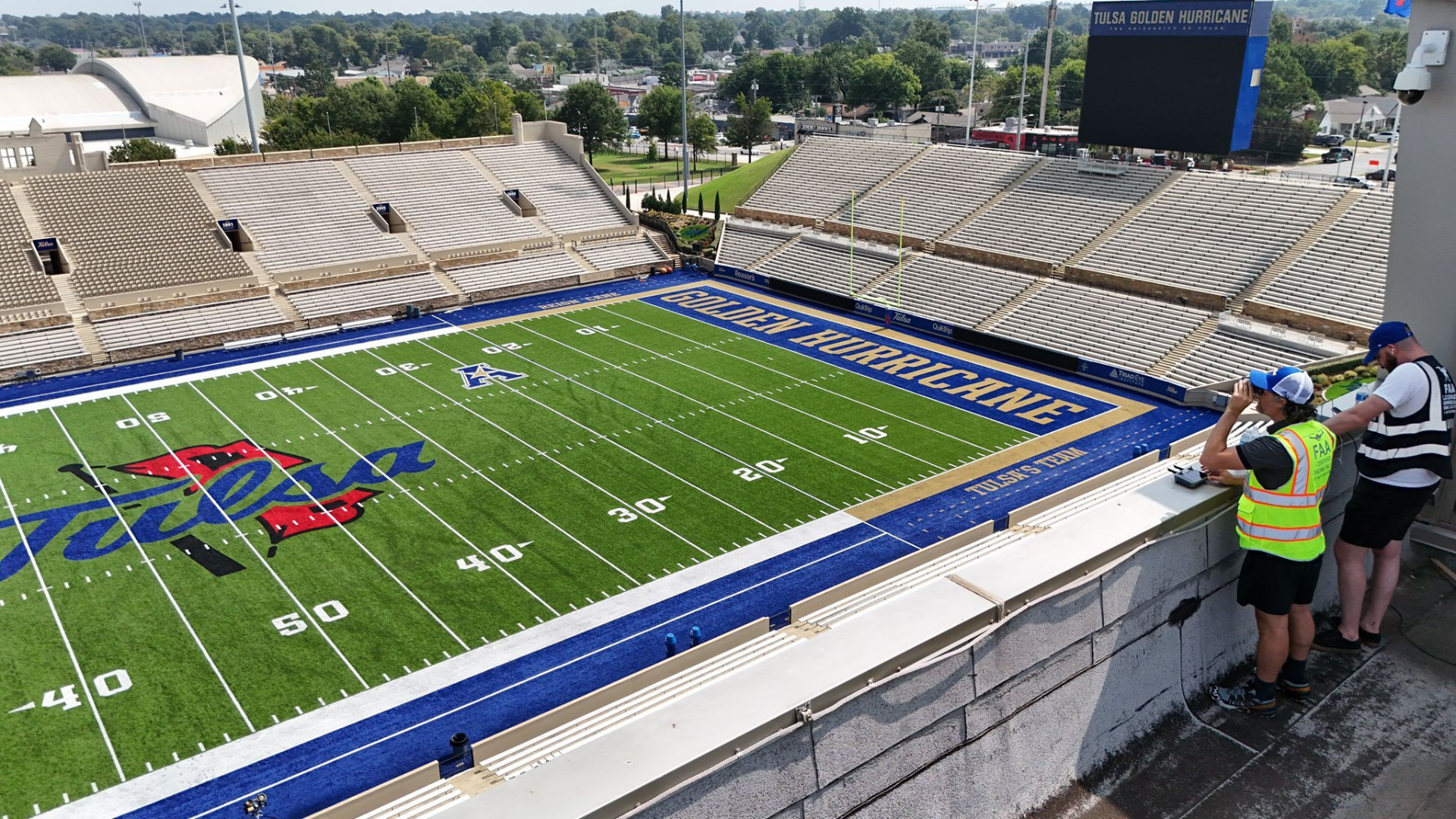
A sensor network purpose-built for cities, not battlefields. Gargoyle aims to bring civil defense and homeland security-grade drone detection to civilians, commercial enterprises, and critical infrastructure.
Increasingly, drones are being used for illicit purposes and not just on the battlefield. Any detection technology designed to identify them usually costs tens to hundreds of thousands of dollars per system. Matteo Jean Pietrobelli (M.J.P.), co-founder and CTO of Gargoyle Systems and alum of Johns Hopkins University’s Systems Engineering program, set out to change that with an accessible alternative for the civilian and commercial world.
Who are you, and why did you found Gargoyle Systems?
M.J.P.: I am the co-founder and Chief Technology Officer of Gargoyle Systems, in charge of everything on the technology and product side, from the roadmap to the design and manufacturing of our first proof of concept. Gargoyle was born of a need we identified in drone detection, where products were highly tailored to the defense industry. There was no accessible solution for national security, commercial applications like hotels, critical infrastructure, and schools. Nor were there any for private citizens concerned about their privacy and safety.
Where did the idea for Gargoyle come from, and what makes it uniquely positioned to succeed?
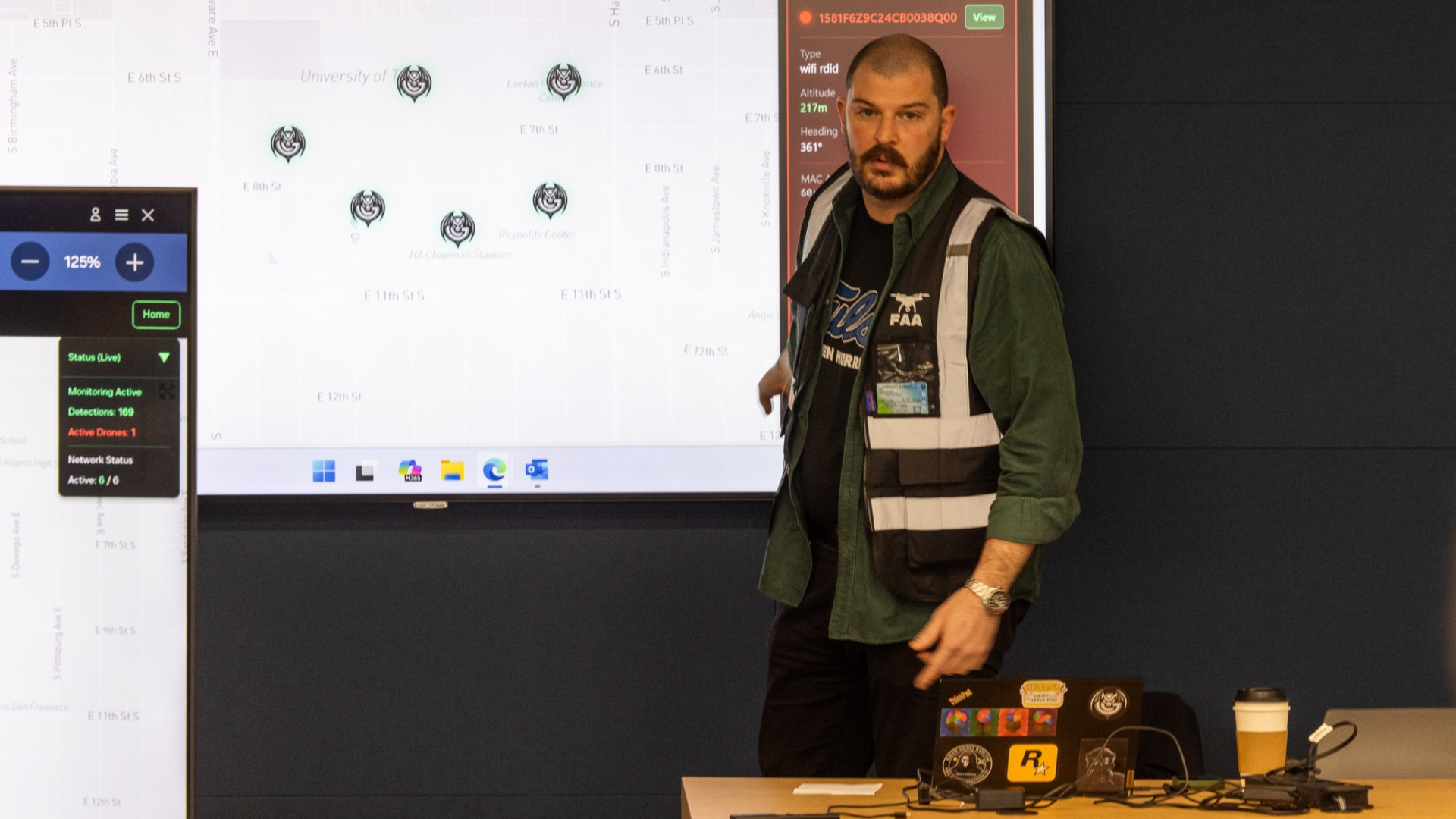
M.J.P.: Some of our colleagues and friends had been exposed to drones casing their homes. Most individuals or businesses cannot afford a product that costs between $50,000 and $500,000 per system. That niche led to two products to detect radio and acoustic frequencies that are drone signatures. And rather than one expensive unit covering an open space, we built a distributed, decentralized network of low-cost sensors that filter out urban signal noise, handle shielding, and keep working even if a unit goes down. Everything we build is passive. The sensors listen to radio frequencies and drone sounds; they never transmit. Traditional radar does the opposite: it is expensive, and it broadcasts its own position, which means it announces the very site it is meant to protect. In a city, that is the wrong trade. A passive, distributed and decentralized network stays silent, needs no spectrum authorization, and adds nothing to the urban noise floor, while still detecting the drones that matter.
Why is this technology especially important right now?
M.J.P.: We call it the triad: privacy, security, and safety, and drones can be flown by clueless, careless, and criminal individuals. The need is becoming prominent now because drones are extremely low-cost and decentralized; they can take off from anywhere. It’s also the Wild West, in many ways, in terms of regulations and awareness. The good news is that the rules and the funding are starting to catch up. And there is significant new funding being aimed at detection, which is exactly the layer we provide.
How has it felt to come full circle and return to Johns Hopkins through the Pava Center Alumni Accelerator?
M.J.P.: The education I received at Johns Hopkins is what propelled me and gave me the tools and knowledge to tackle and address complex socio-techno-economic issues like homeland security and civil defense. Coming full circle also reminds us that JHU can provide great value to people willing to push the boundaries and use their knowledge to do something good for the world.
What have you found most valuable about the Pava Center’s Alumni Accelerator?
M.J.P.: The accelerator has been a blast for many reasons. Building a technology startup is grueling and often unstructured, like building the airplane while falling. But it doesn’t have to feel that way. There are approaches to tackle, analyze, and assess an idea, even before it becomes a product, in a structured and methodological way that lets anyone involved make decisions and channel their focus toward the right steps.